
Have you noticed that your deck seems to be warping faster than you expected? Or your fence is already accumulating rust? You’re not overthinking or seeing things. On the Gulf Coast, our houses have to compete with the high levels of salt in the air. While it may seem innocuous, salt air can do some real damage to your home over time.
Below, we’ll explain how three of the most common construction materials—steel, wood, and concrete—are affected by salt air corrosion, and give you solutions to minimize this damage.
Steel vs. Salt Air
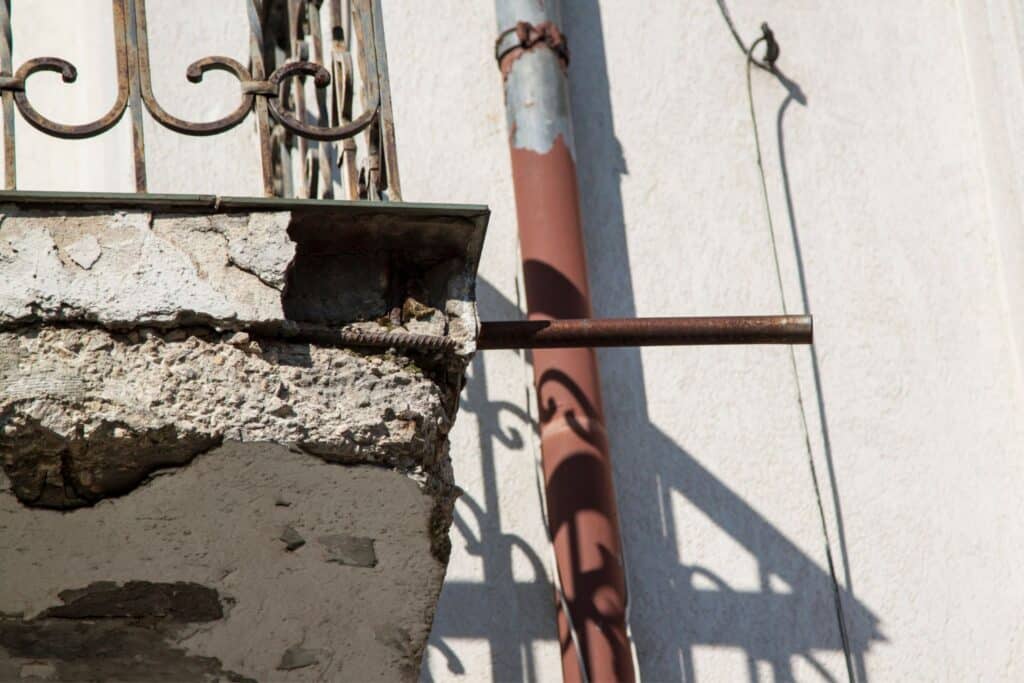
It’s easy to see how extended exposure to salt air can affect steel—just drive around and look at rusted guardrails along the road. This corrosion occurs from the chloride ions in the salt air attacking the oxide in the metal.
Unfortunately, rust is more than an appearance problem. Pitting and crevice corrosion can significantly affect steel’s lifespan. Steel that would have been strong for 50 to 75 years can become structurally unsafe after just 20 to 30 years if exposed to consistent corrosion.
And this corrosion affects more than steel roofs and large structural beams. It also impacts the small screws and fasteners that are holding your house together.
Solution to Salt Air
Choose corrosion-resistant types of steel, such as weathering steel and duplex stainless steel. Then, apply protective coatings that create a barrier between the metal and salty air. A few solid options are polyurethane, epoxy, or zinc-rich primers. Research has found that steel with zinc-protected coatings had a 40 percent reduction in their levels of corrosion.
However, protective coatings are an ongoing need. Every 10 to 15 years, you’ll want to sandblast off the old coating before applying a fresh layer.
Wood vs. Salt Air
Salt air retains moisture more than non-salty air. This means that it can keep wood damp for longer, especially in a humid environment like we have on the Gulf Coast. When wood stays wet for too long, it can warp, rot, splinter, or mold.
Additionally, salt can break down lignin, a natural binder within wood. When this happens, the wood can crack and become weak. This loss of lignin can also change the wood’s color and appearance.
Solution to Salt Air
Like steel, protective sealants and coatings can help wood withstand the salty air around it. There are also woods that are naturally more resistant to salt-filled air, such as cedar and cypress.
Concrete vs. Salt Air
Salt-laden air affects concrete in two ways: on the surface and in its support. Your human eye will notice the surface-level damage first, called spalling. This occurs when salt seeps into the pores of the concrete. The salt lowers the freezing point of the concrete just enough so the concrete thaws more easily, so it goes through more freezing/thaw cycles. While we don’t deal with too many chilly days, over several years, this damage can add up.
The most significant damage, however, is happening underneath. The salt will permeate its way into the concrete until it reaches the steel rebar that reinforces the surface. Then, it will work its magic corroding away the metal, which can lead to cracks and structural damage within the concrete.
Solution to Salt Air
Dense, properly cured concrete is harder for salt from the air to seep into. Also, make sure your steel reinforcement beams are placed at the appropriate depth. The higher they are, the faster the salt particles will reach them.
You can apply salt block sealers to the concrete, and you should also clean your concrete often to remove any salt or water. It’s smart to patch up cracks quickly too, to reduce how easily the salt can get within the concrete.
Choose an Experienced Builder to Ward Away Corrosion
After your home is built, there’s only so much you can do to keep salt damage at bay. The most impactful choice you can make is to work with experienced custom home builders from the get-go who will construct your home out of the best salt-resistant materials.
Clint Tucker Homes has been building houses along the Gulf Coast for over 15 years, and we’ve seen firsthand what materials withstand our natural environment. Contact us today to see how we can make your home as strong as possible.