
Living on the coast offers countless benefits: gorgeous views, gentle breezes, waterfront access. Yet, building a coastal home requires a few additional steps that some homeowners may not realize. To help you have a seamless home-building experience, we’ve gathered the most important factors to consider when building on the coast, including securing the proper insurance, choosing the right building materials, and advocating for the best construction techniques with your custom home builder.
Builder’s Risk Insurance
Before any work is completed on your newly purchased property, you’ll want to have your Builder’s Risk Insurance squared away.
Builder’s Risk Insurance protects your home during the construction process. It provides coverage for a wide range of incidents, including damage sustained from:
- Fire
- Storms
- Theft
- Vandalism
- Lightning
- Hail
- Sewer backup
While Builder’s Risk Insurance is a fairly standard policy for any home builder to purchase, it’s not as straightforward for coastal homeowners. Many insurance companies won’t cover coastal properties, as they’re at higher risk for damage from hurricanes, storms, and flooding.
But don’t worry—you still can insure your coastal home-building project! You just need to find a company that specializes in insuring coastal construction builds. Coastal Builder’s Risk policies are designed to cover the additional risks that a coastal home may experience, providing some peace of mind as you go through the home-building process.
Building Materials
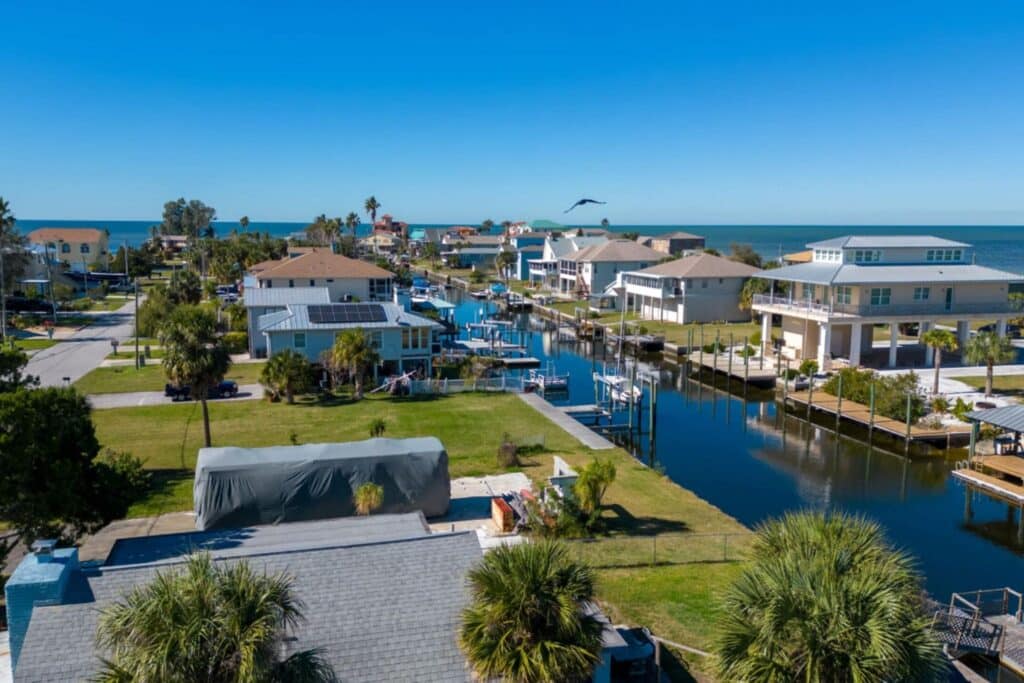
Living on the coast also affects what materials you choose to build your home. You want to select durable building components that will withstand the unique elements of living on the Gulf Coast, including high humidity levels, salty air, and regular storms. Here are some long-lasting material options.
Metal roofing
During a hurricane with 80+ mile per hour winds, you don’t want to worry about if the tiles are going to fly off your roof. Roofing made from aluminum, copper, and zinc will stay secure in the face of strong winds. The metal roofing materials can also be treated to be rust-proof, so rain and humidity don’t age your roof prematurely.
Fiber cement siding
Wood siding can rot, swell, and warp due to the coast’s high salt content in the air. Instead, opt for fiber cement for siding. It’s a tough material that’s resistant to both fire and termites. The look of the clean, bright siding has also become associated with that perfect coastal look.
Concrete
While it’s not glamorous, concrete is one of the best choices you can make for a strong and sturdy home on the coast. There are special variations of concrete you can choose, including fiber-reinforced concrete to make it even more durable in the face of severe weather and strong winds. There are also new types of concrete that are designed specifically to counteract corrosion, making the material more resistant to moisture than it already naturally is.
Construction Techniques
When you sit down with your home builder to plan out your coastal house, there are several construction methods and design elements you can request. A few ideas include:
- Installing spray foam insulation to lower energy costs
- Choosing windows with Low-E coatings to keep heat out
- Selecting HVAC systems with dehumidifiers
- Using hurricane-rated windows and doors
Partnering with a Trusted Coastal Home Builder
At the end of the day, you could have the best insurance policy and materials picked out for your home, but if you hire custom home builders not familiar with coastal builds, you’re left with an end product that doesn’t live up to your expectations.
At Clint Tucker Homes, we’ve been building custom homes around the Corpus Christi area for 15 years. We understand the unique challenges and opportunities that come with waterfront homes, and we use that expertise to build finely crafted homes that will endure the test of time. To learn how we could help you create your ultimate coastal home, contact us today.