
Of all the choices you make building your dream Texas Gulf home, the exterior finish is one of the most visible. The right finish can make your house stand out on the block, while the wrong one could deteriorate, become discolored, or prematurely age your home.
Below, we’ll highlight our favorite exterior finishes: stucco, fiber cement, and vinyl. We’ll run through the pros, cons, and costs of each, and point out the special factors coastal homeowners have to consider when making their final decision.
Factors to Consider for Your Gulf Home Exterior Finish
Our close proximity to the Gulf means dealing with a few elements that landlocked homeowners don’t have to worry about.
Salt air is one of the most important factors to keep in mind. Salt particles in the air can settle on surfaces and cause them to break down more quickly than normal. Salt can corrode metal, warp wood, discolor masonry, and cause paint to peel and fade.
The high humidity of our Gulf environment accelerates this process. The surfaces stay wet longer and retain moisture, which allows the salt to penetrate deeper into the porous surfaces and do further damage.
The cherry on top is our bright sunshine, which blasts high levels of UV radiation on your home day after day. These rays can also increase the levels of fading and discoloring on your finishes.
Which Exterior Finish to Choose?
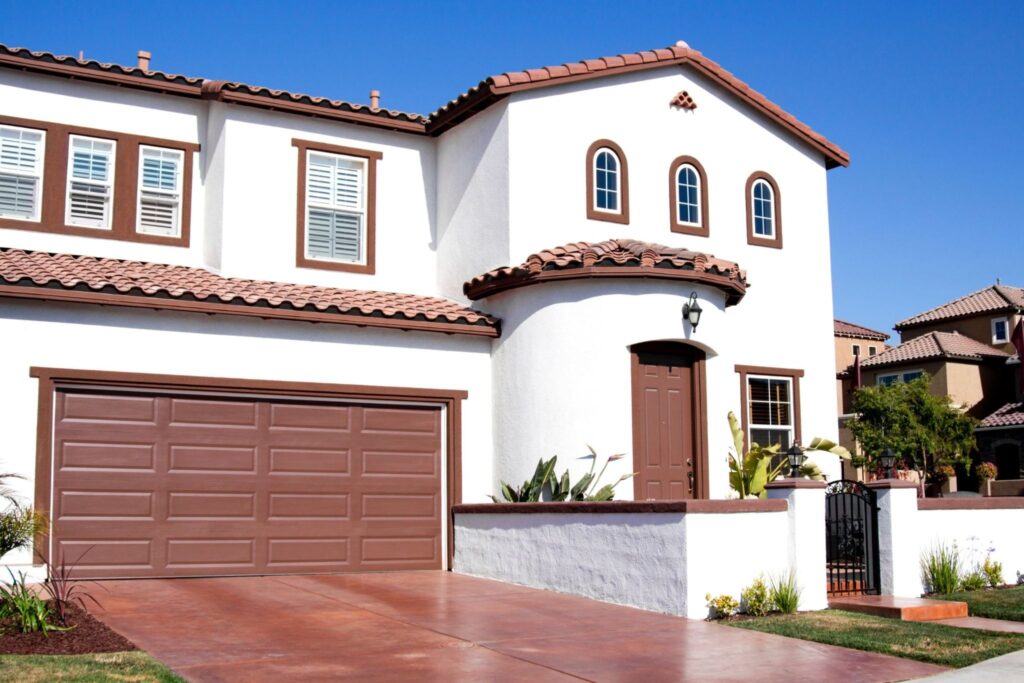
With these factors in mind, let’s explore the most resilient finishes for Texas Gulf homes.
Stucco
Stucco is a durable finish made from cement, lime, sand, and water. This cement base means that stucco avoids many of the issues that other materials face from salty, humid conditions. For example, it doesn’t rust like metal finishes or rot like wood.
Stucco is designed to act as a protective layer between your home and the elements. The rock-hard finish repels rainwater, sand and dust, and insects in a way that softer finishes can’t.
However, stucco is porous and can crack, which allows salt particles to enter into the material. The salt can lead to a white powdery substance on your exterior walls. If left untreated, the trapped moisture can also lead to mold.
How to Prepare Stucco for Coastal Homes
To prevent salt damage, homeowners often spray down the walls of their stucco home once a month. This regular cleaning helps wash away the salt particles before they cause long-term effects.
Many homeowners also choose to paint their stucco. If they use a UV-resistant paint, this can help mitigate the consequences of the bright Texas sunshine and keep the color looking fresh. The paint can also seal up any cracks, which provide an additional layer of protection.
Cost of Stucco
Stucco is considered to be a mid-range to high-end finish option in terms of price. Stucco installation typically costs between $6 to $12 per square foot.
Fiber Cement
Fiber cement is a mixture of Portland cement, sand, water, and cellulose fibers. Much like stucco, it withstands many of the damaging elements of living on the Gulf Coast like moisture and rot. However, this is where the similarities end.
Fiber cement offers a very different facade from the continuous look of stucco. Fiber cement is installed as planks, giving the house a paneled look. Fiber cement boards have a lower chance of cracking than stucco, which makes them more attractive for some homeowners. If a panel is damaged, it’s also relatively easy to fix by replacing the board.
While fiber cement is very durable, particularly high winds can pry the panels off. Stucco, on the other hand, isn’t affected by winds.
Cost of Fiber Cement
Fiber cement siding typically costs between $5 to $14 per square foot.
Vinyl
Vinyl siding is made from polyvinyl chloride (PVC) resin. The panels are resistant against weather, rot, and moisture, but the plastic base isn’t quite as strong as the cement foundation of fiber cement and stucco. The boards are thinner and more flexible, making them more susceptible to cracking or breaking off than the similarly-looking fiber cement panels.
However, if you don’t anticipate dealing with intense weather very often, vinyl is a great low maintenance option. Once the siding is installed, you just need to rinse it once a year or so (and many homeowners don’t even do that).
Cost of Vinyl
The biggest benefit of vinyl is its low cost. Vinyl siding typically costs between $3 to $8 per square foot, including installation costs. This means vinyl offers a durable, attractive finish at roughly half the cost of stucco or fiber cement.
Leave the Installation to Clint Tucker Homes
Still unsure which exterior finish will best complement your home? At Clint Tucker Homes, we’ve been building coastal homes in Texas for over 15 years. We’ve seen which finishes stand up to time and the elements, and we can offer our expert recommendation for your specific home. Choose the Gulf Coast’s trusted custom home builders for your exterior finish installation. Contact us today.